
Herbal Remedies for Sleep: Comparing Valerian, Lemon Balm and Lavender
Valerian, lemon balm and lavender all calm the evening in different ways. A practical comparison of what the evidence says, how each tastes, how to prepare them and who should...
A restless night rarely has one cause, and it rarely has one cure. Still, a few herbs have earned their place beside the bedside lamp: simple to prepare, gently calming, and pleasant enough that you will actually drink them. Valerian, lemon balm and lavender are the three most often reached for, and although their reputations overlap, they behave very differently in a cup. Here is how they compare on taste, preparation, evidence and safety.
Three herbs, three different jobs
None of the three is a sleeping tablet. They are traditional soothing herbs, and most people who use them well describe a mild nudge — an easier drift into sleep, a calmer evening — rather than a switch being flipped. Expect the certainty of a prescription sedative and you will be disappointed; judge one on a single difficult night and you will be too. These herbs tend to reward consistency.
It also helps to know what kind of bad sleeper you are. If you lie down tired but your mind starts reviewing the day, you probably want something calming for the nervous system. If you fall asleep fine but wake at three with a racing head, a gentler herb taken earlier in the evening may suit you better. If your problem is a body that simply will not switch off — tight shoulders, restless legs, a buzzing feeling — the aromatic route tends to help more than a strong-tasting root.
Preparation matters more than people expect. Water temperature, steeping time, whether you cover the cup, and how fresh the dried herb is all change what ends up in the glass. A jar that has sat open on a sunny shelf for two years tastes of dust and does very little.
Valerian: earthy, traditional, unpredictable
Valerian root (Valeriana officinalis) has the longest history of the three in European herbal practice and is the most studied, though results have been mixed — trials use different preparations and doses, and people respond differently. Some find it noticeably helpful for falling asleep; others notice nothing at all. It is usually taken 30 to 60 minutes before bed, and many herbalists suggest its effects build over a week or two of regular use rather than arriving on the first night.
Taste and preparation
Expect earthy, bitter and slightly malty — closer to root beer than fruit tea. Use one to two teaspoons of dried root per mug, or a teabag of powdered root, and steep it covered for 10 to 15 minutes; the aromatic compounds evaporate if you leave the mug open. Because the root is tough, simmering it gently for five minutes before steeping gives a stronger infusion. Tinctures are easier on the palate — follow the label.
A few practical notes. Cold infusions (steeping the root in cold water overnight) taste milder and suit people who dislike the smell, which has been unkindly compared to old socks. Capsules and tinctures avoid the flavour entirely, and because valerian is often standardised, they are also more consistent from bottle to bottle. Whichever you choose, do not chase a bigger dose if the first attempt does nothing: some people simply do not convert valerian into whatever it is that makes others sleepy, and taking more mostly produces a dry mouth and a heavy morning.
Lemon balm: the gentle everyday herb
Lemon balm (Melissa officinalis) belongs to the mint family, and it behaves like one: quick to grow, quick to wilt, and pleasant enough to drink simply because you enjoy it. Its reputation is less about knocking you out and more about taking the edge off — the tense, wired feeling that keeps sleep at arm's length. That makes it a reasonable first choice if valerian feels too heavy, or if your sleeplessness is tied to an anxious stomach or a stressful evening. It is also gentle enough for daytime use, which is why it turns up in a lot of "calm focus" blends.
Taste and preparation
Fresh leaves give a bright lemon-mint flavour that dried herb only hints at; one tablespoon of chopped fresh leaf or one to two teaspoons of dried leaf per mug is plenty. Use water just off the boil rather than fully boiling — around 80°C — and steep for five to eight minutes with the cup covered. Longer steeping and hotter water pull out bitterness and a hay-like note. Iced lemon balm with a slice of lemon makes a good early-evening drink in summer, and it blends well with both of the other herbs here.
Lavender: more than a pillow scent
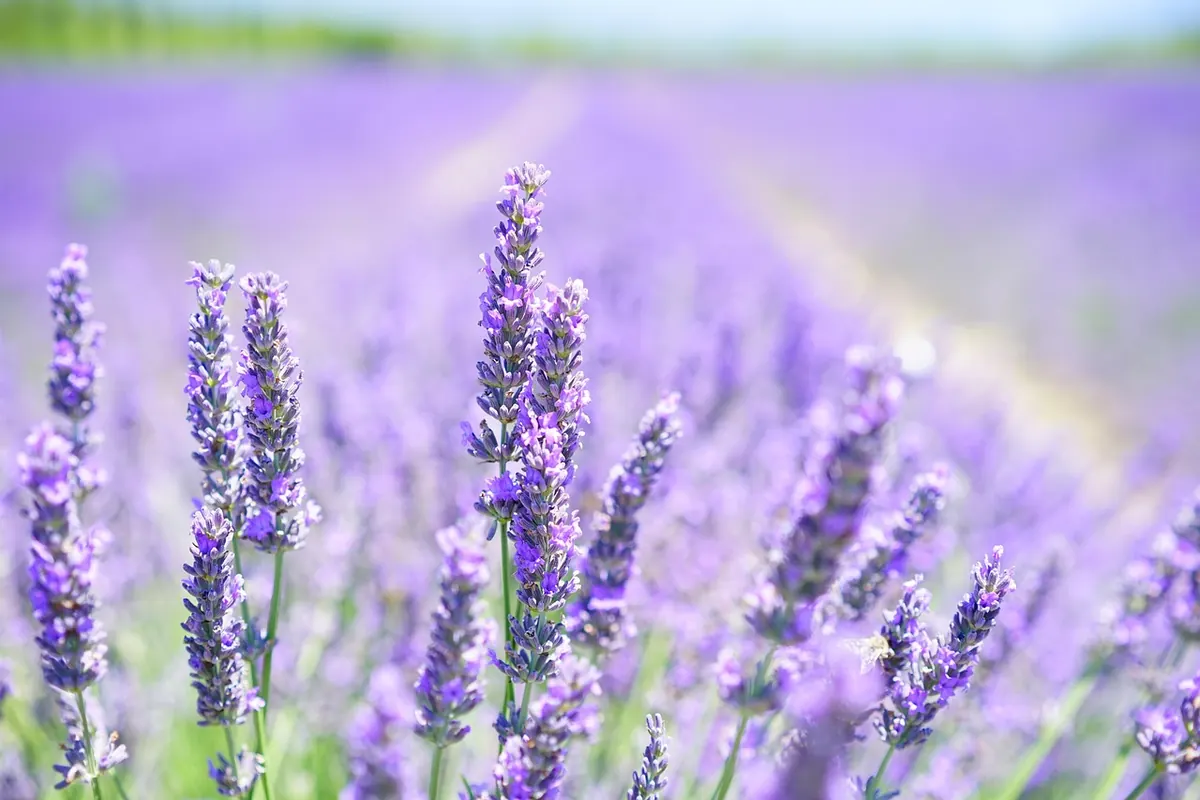
Lavender (Lavandula angustifolia) has the most interesting evidence of the three. The strongest findings come not from tea but from standardised oral preparations of lavender essential oil, which have been studied for anxiety and for sleep quality in people with anxious restlessness. The aroma has its own modest effect: simply smelling lavender as part of a wind-down routine can slow the mind and signal that the day is over. That signalling may matter as much as the chemistry.
Taste and preparation
Use culinary-grade buds, not potpourri, or your tea will taste like a drawer of sweaters. One teaspoon of dried buds per mug, water just off the boil, five minutes covered — and taste it before it goes cold, because it turns soapy fast. A little goes a long way, and lavender is best used as a seasoning rather than the main ingredient: a pinch alongside lemon balm is a reliable combination. If you dislike the taste, keep it for the air instead — a bowl of hot water with a few buds nearby, or a drop of essential oil on a tissue.
How they compare
- Valerian — the most sedative-leaning of the three, the most traditional, and the least predictable. Best for people who need help falling asleep and can tolerate a strong, earthy taste. Effects may take one to two weeks to show.
- Lemon balm — the mildest and most forgiving. Best for anxious, tense evenings and for people who want something they can also drink in the afternoon. Rarely dramatic, rarely unpleasant.
- Lavender — the most aromatic and the most useful if your sleeplessness is bound up with anxiety. Strongest evidence as a standardised oral preparation; as a tea it is a gentle ritual rather than a treatment.
Safety, interactions and the mistakes people make
These herbs are generally well tolerated, but "natural" is not the same as "nothing to consider". Check with a pharmacist or doctor before using them if you are pregnant or breastfeeding, if you take sedatives, antidepressants, thyroid medication or blood thinners, or if you are due for surgery. Valerian occasionally causes morning grogginess, vivid dreams or headaches; stop it if you notice unusual fatigue, and avoid combining it with alcohol or driving shortly after a large dose. Keep essential oils away from children and pets, particularly cats, and never swallow essential oil unless it is a product specifically made and dosed for that purpose.
- Start with the smallest sensible dose, not the largest. More is not more restful.
- Do not expect results on night one. Give a single herb one to two weeks before judging it.
- Do not drink a large mug immediately before bed. A 3 a.m. wake-up for the bathroom undoes the benefit.
- Buy from a brand you recognise, store dried herbs airtight and out of the light, and replace them within a year.
Building a simple evening routine
- Pick one herb and set a time — usually 30 to 60 minutes before bed, with the lights already low.
- Drink it away from a screen, and keep a two-line note of how you slept. Patterns show up faster than you expect.
- If one herb does nothing after two weeks, try another rather than adding more of the same.
- If you do combine, keep it simple: lemon balm plus lavender, or lemon balm plus a small amount of valerian.
- Pair the cup with the boring basics — a consistent wake time, a cool dark room, no caffeine after midday.
No herb will out-argue a late espresso, a hot bedroom and a phone at midnight. Treat the tea as one small part of an evening, not the whole of it.
If sleep remains broken for weeks, or you are snoring heavily, waking gasping, or feeling exhausted despite enough hours in bed, that is a conversation for a doctor rather than another jar of tea. For the ordinary restless night, though, these three herbs are cheap, pleasant and worth a fair trial — as long as you judge them on a fortnight rather than a single evening.
Photo: Hans / Pixabay