Seasonal Honey Calendar: What British Beekeepers Harvest Month by Month
A month-by-month guide to British honey, from spring rapeseed and blossom to summer clover, moorland heather and autumn ivy, plus tips for buying at markets.
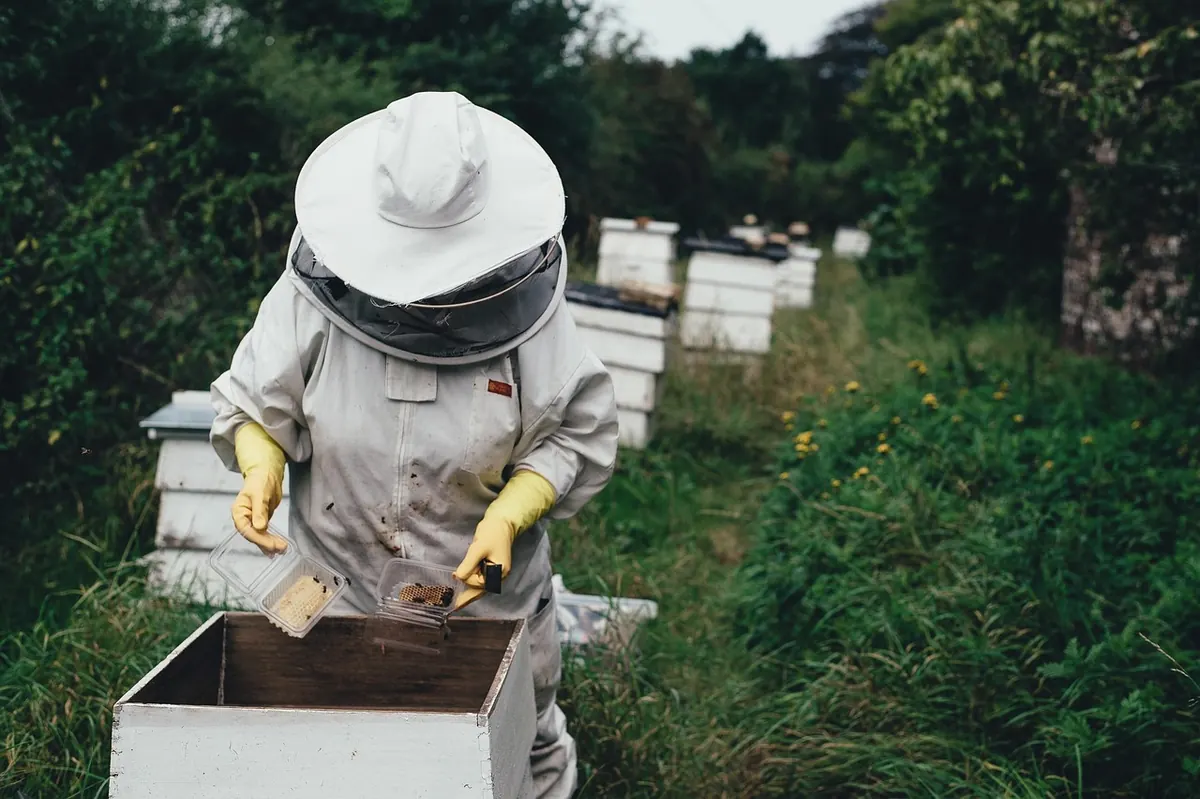
Most honey sold in Britain comes from somewhere else, blended until the year and the place have been smoothed out of it. A jar bought from a beekeeper a few miles down the road is a different thing altogether. It carries the taste of one season, one landscape, and a set of decisions made at the hive.
What lands in that jar depends on what was flowering within roughly three miles of the apiary, whether the weeks were warm and dry enough for nectar to flow, and whether the beekeeper judged the colony could spare a crop. Honey is the bees' winter fuel, so a careful beekeeper takes only the surplus and leaves enough stores behind. What follows is a working calendar of British harvests. Treat it as a guide rather than a timetable: Cornwall, the Welsh hills and the Scottish Highlands can run three or four weeks apart.
The Shape of the British Honey Year
British beekeeping tends to have two main flows, with a quiet stretch between them. The first comes from trees and hedgerows in spring, the second from field and garden flowers in high summer. In a warm, damp year the two blur together and hives stay busy from April to August. In a cold, dry one there can be a fortnight in June when the bees find almost nothing worth visiting.
When you see honey labelled with a county, a moor or a single flower, someone has made a deliberate choice about when to take the crop. That timing is the whole craft.
Spring: Rapeseed, Blossom and the First Supers
From mid-April, fruit trees, hedgerow blossom and dandelions give colonies their first real work of the year. Apple, pear, plum, cherry, hawthorn, sycamore and horse chestnut all contribute, usually in a shifting mix that changes week by week. Honey taken at this point is often pale, light-bodied and floral, though rarely from a single source.
Oilseed rape is the exception. Where there is a field of it within range, bees will work it hard, and the crop arrives quickly. Fresh rapeseed honey is pale and can taste faintly peppery or cabbagy, and it sets firm within weeks — sometimes days. Beekeepers who take it usually extract early and stir it into a soft set rather than leaving it to harden in the jar.
Why rapeseed honey goes solid
Granulation is not spoilage and not a sign of added sugar. Honey is a supersaturated sugar solution, and crystals form naturally around bits of pollen and dust. Rapeseed honey is high in glucose, which crystallises fastest; acacia and honeydew honeys are high in fructose and stay runny for years. A creamy, spreadable jar is exactly what some beekeepers are aiming for.
The June Gap and the Bramble Flow
Once spring blossom is over and before summer flowers open, many areas go short. Beekeepers watch the scales and the brood nest rather than assuming a crop. Then bramble arrives, often in the last days of June, and it is one of the most reliable sources in the country. Bramble honey is usually pale amber, fruity and fine-grained, and it sets to a soft, smooth texture that spreads well.
High Summer: Clover, Lime and the Main Crop
July is the month most British beekeepers think of as harvest time. White clover is the classic source: light, mild and buttery, with a hay-and-vanilla softness that makes it the standard against which other honeys are judged. Field beans, raspberry, phacelia and garden flowers fill in the gaps around it.
Lime trees are the other great event of high summer, usually in July. Lime honey is pale, sometimes with a greenish cast, and has a distinct cool, minty edge that people either love immediately or find odd in tea. Where lime and clover grow together, the bees mix them, and the result is often better than either alone.
Weather does most of the deciding here. Nectar secretion slows in drought, and heavy rain washes what is there out of the flowers. A hot, still week can mean a super of honey; a wet one can mean nothing at all.
Late Summer and Autumn: Heather, Honeydew and Ivy
Moorland heather is the most distinctive British crop. Bell heather comes first, with ling heather following from late July into September on the moors of Scotland, Yorkshire, the Peak District, Exmoor, Dartmoor and parts of Wales. Heather honey is thixotropic — it holds its shape like a soft jelly and will not run out of a jar — so it has to be pressed or spun with special equipment rather than drained. It is dark, rich and faintly bitter, and it commands attention on toast.
Honeydew honey appears in some years, particularly after a hot, dry summer. It is not made from flowers at all but from the sugary secretions of aphids feeding on oak, sycamore and lime. The result is dark, malty and slow to crystallise, closer to molasses than to clover.
Ivy is the last flow, running from September into October. It is strong, slightly bitter and granulates quickly, and many beekeepers leave it on the hive as winter stores rather than selling it. Where it is sold, it is usually cheap and unmistakably savoury.
A Month-by-Month at a Glance
- March–early April: Willow, hazel and early blossom give pollen, not surplus honey. Colonies are building.
- Mid-April to May: Fruit blossom, dandelion, hawthorn and sycamore; oilseed rape dominates where it grows. First crops taken.
- June: The June gap in many areas, then bramble from late in the month. Light, fruity honey.
- July: The main crop. Clover, lime, field beans and garden flowers at their peak.
- August: Ling heather on the moors; clover continues on lowland farms. Darker, stronger honey.
- September: Late heather and the start of ivy. Most hives are winding down.
- October–November: Ivy finishes the year. Stores are checked and colonies prepared for winter.
- December–February: No harvest. Bees cluster, and beekeepers repair equipment and order queens.
If a jar is labelled simply "British honey", it is probably a blend from several hives and several months. That is not a fault — but it is a different thing from a single apiary's July crop.
Buying Honey at Local Markets
Farmers' markets, village shows and honesty boxes are where British honey gets interesting. Ask two questions and you will learn a great deal: what was in flower when this was taken, and where are the hives? A beekeeper will usually tell you the parish, the month and whether the jar is from one site or several.
Look past the colour. Darker honey is not better or worse, only different — heather and honeydew are dark, clover and lime are pale. Cloudiness or a grainy texture means granulation, which is normal and can be reversed by standing the jar in warm water, though gentle warming is best done once. If a honey has set solid, a soft-set version of the same crop has simply been stirred during crystallisation.
Store jars somewhere cool and dark with the lid tight. Honey keeps for years, and refrigeration only speeds up granulation. Buy a small jar of anything unfamiliar before committing to a larger one, and taste it plain rather than in tea, where strong flavours disappear.
One safety note: honey should not be given to babies under twelve months old, because of the small risk of infant botulism. If you have a health condition affected by sugar intake, or you are buying honey for someone with a pollen allergy, speak to a GP or pharmacist first. Beyond that, the simplest advice is the most enjoyable: buy from someone who can tell you what the bees were doing that summer.
Photo: Pexels / Pixabay